Guides • Perfecting your Craft
Last updated on Dec 08, 2025
15 Beloved Romance Tropes — With Iconic Examples

Martin Cavannagh
Head of Content at Reedsy, Martin has spent over eight years helping writers turn their ambitions into reality. As a voice in the indie publishing space, he has written for a number of outlets and spoken at conferences, including the 2024 Writers Summit at the London Book Fair.
View profile →A romance trope is a plot device, theme, or motif that commonly appears in romance fiction. Many romance readers use tropes to describe their tastes, and some savvy romance authors even market their books with tropes: “Don’t miss this slow-burn, enemies-to-lovers romance with a girl next door and a bad boy hero.”
In other words, tropes are more important than ever in today’s romance landscape. Below, we’ll reveal some of the genre’s best-loved chestnuts and how they’re used (or cleverly twisted) to engage readers. Sealed with a kiss, here are some of the most popular romance tropes:
|
Romance trope ❤️ |
What is it? 📝 |
Example 📚 |
|
Meet-cute |
Potential lovers meet in an amusing, adorable, or coincidental way. |
Notting Hill: Anna Scott walks into Will's bookshop, then a few minutes later they literally bump into each other on the street. |
|
Love triangle |
Two people compete for the affection of a third person. |
The Hunger Games: Katniss must choose between Peeta and Gale. |
|
Enemies to lovers |
When two characters dislike each other, but eventually fall in love. |
Pride and Prejudice: Elizabeth Bennet and Mr. Darcy begin with mutual disdain, but slowly develop love for each other. |
|
Friends to lovers |
A potential couple realizes that it’s time to get out of the friend zone. |
One Day: Dex and Emma meet on graduation night and maintain a friendship for twenty years before their relationship evolves. |
|
Fake relationship |
A couple pretend to be in love for external gain, but end up falling for real. |
To All the Boys I've Loved Before: Lara Jean pretends to date someone to cover up a secret love letter, but develops real feelings for him. |
|
Forced proximity |
Two people must share an enclosed space, where they inevitably develop feelings. |
Speed: Jack and Annie are trapped on a bus with a bomb and grow closer while trying to survive. |
|
Happily ever after |
The story ends with the couple together in a satisfying, happy conclusion. |
The Hating Game: Rival assistants Lucy and Joshua's disdain transforms into love with a happy ending. |
Now, let’s look at these heart-fluttering tropes in more detail.
1. Meet-cute
A staple of romantic comedies, the “meet-cute” is a scene in which our lovers meet in an amusing, adorable, or serendipitous way. Think of two people literally bumping into each other on the street, or meeting in a bar after they’ve both been dumped by other people.
Whatever the circumstances, a meet-cute should be just that: cute, not cloying. The trick is to avoid being too saccharine or testing the limits of believability. A well-executed meet-cute should read like a sweet (yet plausible) “how I met your mother” story.
Check out the examples below to see how it’s done!
Meet-cute examples
Notting Hill (Romantic Comedy)
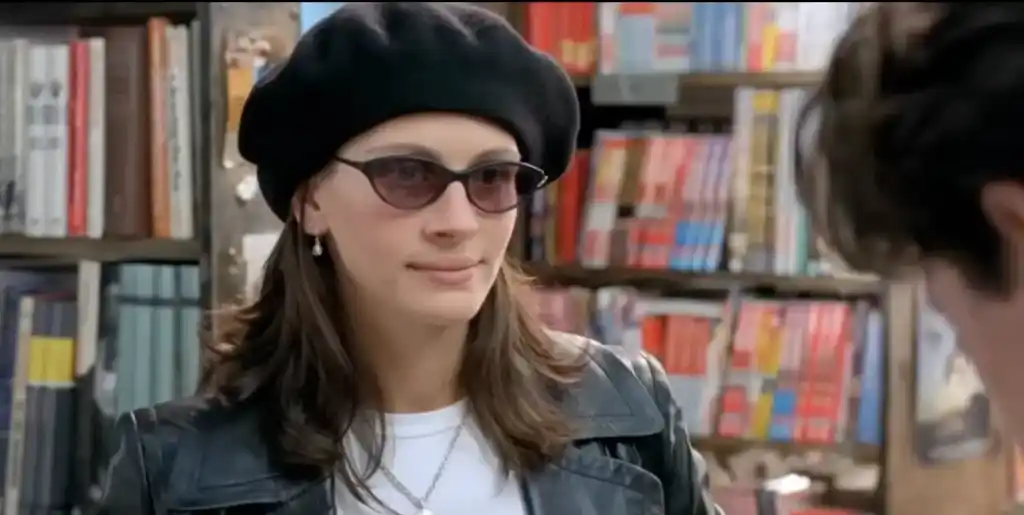
In this Richard Curtis rom-com, the meet-cute comes in two parts. First encounter: Anna Scott, a famous actress, steps into Will Thacker's small travel bookshop in London. A brief-but-flirty conversation ensues, Anna buys a book and leaves… but they soon meet on the street again, as Will bumps into her. This huge coincidence is tempered by Will’s realistic bumbling and the genuine intimacy that springs up between them. In other words: the perfect meet-cute.
Red, White & Royal Blue by Casey McQuiston (LGBTQ Romance)
RWRB starts with a hilariously disastrous meet-cute. Alex and Henry — the First Son of the United States and a British prince respectively — get into a fight at a royal wedding and end up destroying a very expensive cake. They must then do political damage control by pretending to be best friends… and soon enough, their relationship blossoms far beyond friendship. Another meet-cute for the (history) books.
FREE COURSE
How to Write an Irresistible Romance
10 lessons to help you plan, draft, and publish a swoon-worthy romance.
2. Love triangle
A love triangle involves two people vying for the affection of a third. From Prince Arthur, Guinevere, and Lancelot to the (more contemporary) Edward, Bella, and Jacob in Twilight, this trope practically guarantees drama and intrigue! After all, our protagonist has to choose between two people they care about — and somebody’s going to get their heart broken.
Writers can use love triangles in almost any situation or subgenre. The key is to make both lovers seem like equally viable options for the protagonist; nothing kills the tension faster than realizing there’s no real competition. To that end, make sure every “point” of your triangle is sufficiently developed as a character — and that your protagonist has equal justification for either choice.
Here are some examples where three’s a crowd.
Love triangle examples
Bridget Jones’s Diary (Romantic Comedy)
In Bridget Jones’s Diary, our heroine vacillates between her charming yet fickle boss, Daniel Cleaver, and the uptight but secretly smoldering Mark Darcy. A modern-day Lizzy Bennet, Bridget stumbles from sincerity to frivolity and back again — but not to worry, all’s well that ends well in this rom-com.
The Hunger Games by Suzanne Collins (Dystopian YA)
The love triangle between Katniss, Peeta, and Gale is different than most — in truth, it’s almost more symbolic than romantic. For Katniss, choosing Peeta means safety and security; Gale, meanwhile, represents loyalty to her district’s cause. With this triangle, Suzanne Collins shows how love doesn’t have to be all about romance… and how sometimes, having less romance in a story makes it all the more powerful.
3. Enemies to lovers
Increasingly popular in the BookTok era, “enemies to lovers” is another major romance trope. This trope — also known as “rivals to lovers” and “hate to love” — is when two characters start out disliking each other, but eventually fall head-over-heels.
These lovers often ruffle each others’ feathers not because they’re so different, but because they’re similar. Maybe they’re equally competitive, or have equally high standards for something — which causes them to clash because no one else cares like they do. The best enemies-to-lovers should have a rivalry that feels realistic, but not so fierce that they can never overcome it.
Here are some examples of books and movies with delectable enemies-to-lovers arcs.
Enemies to lovers examples
Pride and Prejudice by Jane Austen (Historical Romance)
Speaking of Lizzy Bennet (from our Bridget Jones example), let’s look back at the OG. When Elizabeth Bennet meets Mr. Darcy and overhears him insulting her, it sparks a legendary battle of pride (and prejudice!). What begins as mutual disdain slowly softens — first to cautious friendship and then, finally, to love. The slow burn of Pride and Prejudice makes their relationship all the more tantalizing; Lizzy and Darcy are the original enemies to lovers for a reason!
10 Things I Hate About You (YA Romance)
In this high-school update of The Taming of the Shrew, bad boy Patrick Verona is paid to court a sharp-tongued girl named Kat Stratford. As you can probably guess, Patrick’s persistence — and Kat’s emerging vulnerability — leads to them falling for each other. Even when Patrick’s original motivations are revealed, their feelings are strong enough to overcome it (after a little groveling from Patrick, of course).
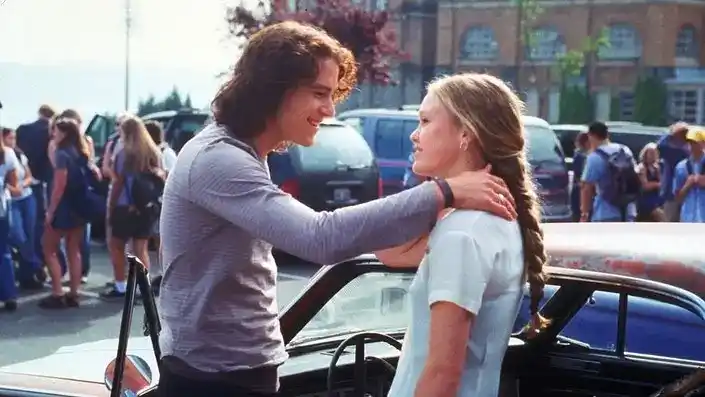
Who needs affection when you have blind hatred? At first, anyway (image: Touchstone Pictures)
4. Friends to lovers
The "friends to lovers" trope, meanwhile, is when two friends finally realize romantic feelings for each other. Maybe they were childhood besties who went through the trials of adolescence together, or maybe they’re work buddies who suddenly see each other in a new light. Whatever the details, the progression should feel authentic.
You can use the idea of “best friends becoming more” in all sorts of settings. Arguably the most important element here is a great story catalyst that forces one of the characters to realize how they feel about the other. If they’ve known each other for a long time, that catalyst had better be convincing!
Here's some examples of when characters attempt to get out of the dreaded friend zone...
Friends to lovers examples
One Day by David Nicholls (Contemporary Romance)
Dex and Emma meet on their graduation night and form a friendship that shapes the next twenty years of their lives — despite going in very different directions. As they drift in and out of sync, Emma’s career struggles and Dexter’s substance abuse threaten their friendship. But no matter how much life gets in the way, their deep connection remains obvious… so the big question is, will they or won’t they? (That’s the real thrill of friends to lovers: the lengthier the friendship, the higher the stakes.)
Mansfield Park by Jane Austen (Historical Romance)
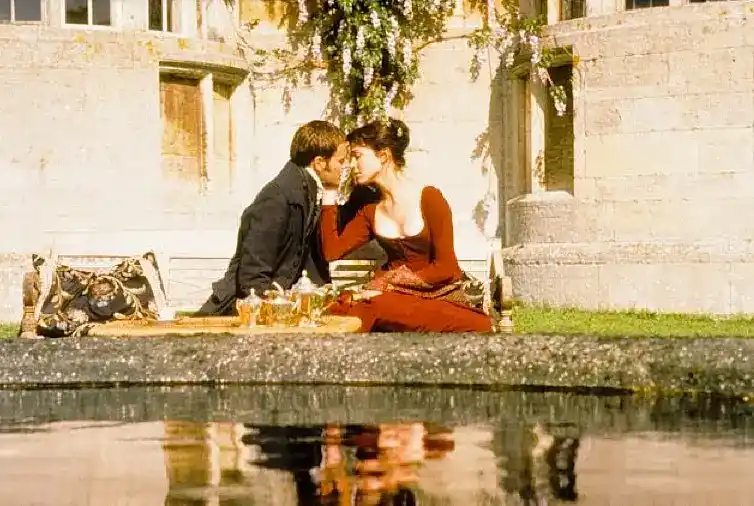
In another Austen classic, young Fanny is best friends with her cousin Edmund. As they grow up together, Fanny falls in love with Edmund — a fact she conceals after Edmund makes it clear he does not feel the same. But when Fanny is sent away and Edmund nearly marries the wrong woman, they reunite, with Edmund finally seeing what was in front of him all along. It’s a great example of the all-important catalyst: one person leaving the other’s life, even temporarily, can trigger a revelation.
FREE RESOURCE
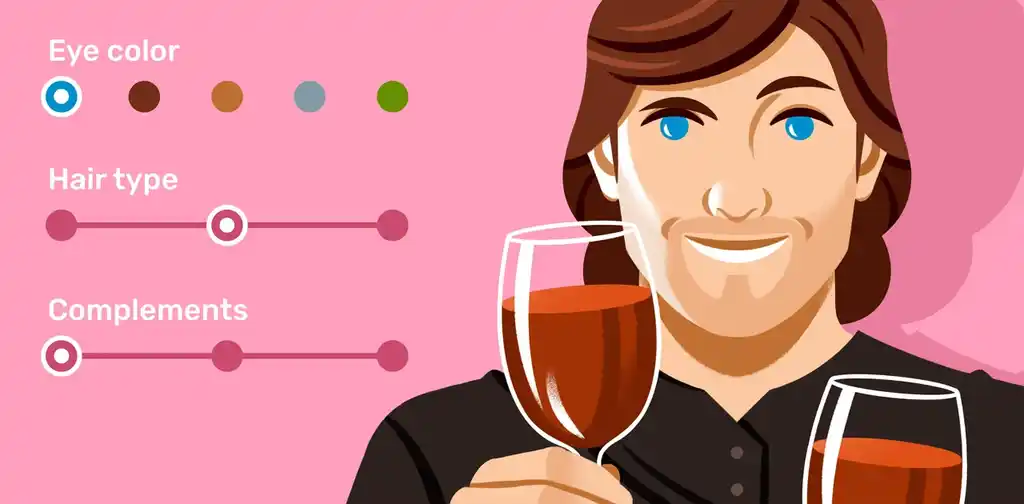
Reedsy’s Character Profile Template
Fill this out to develop characters who will have readers smitten.
5. Opposites attract
This trope centers on two romantic leads who are fundamentally different in personality, lifestyle, values, or worldview. Yet just as clashing leads to chemistry with the “enemies to lovers” trope, the same is true for “opposites attract”!
One of the most popular iterations of this trope is the grumpy/sunshine pairing, in which one party is cheerful and the other is, well, a bit of a grouch. Other variations include introvert/extrovert; cautious/adventurous; and creative/practical pairings. The key is to ensure your characters don’t just have superficial differences, but genuinely high-stakes ones that force them to evolve.
Let's take a closer look at some examples.
Opposites attract examples
The Love Hypothesis by Ali Hazelwood (Contemporary Romance)
Olive Smith is a bubbly PhD student and chronic people-pleaser. Adam Carlsen is a brilliant professor with a reputation for being cold and intimidating. In other words, they’re textbook grumpy/sunshine — so when they pretend to date to solve their problems, it’s unclear whether these differences will be their downfall. But soon, they bring out the best in each other: Adam helps Olive advocate for herself, while Olive helps Adam let his emotional guard down.
Cheers (Workplace Sitcom)
Sam and Diane are so iconic, their names are synonymous with “opposites attract”. Sam Malone is a charming blue-collar bartender, while Diane Chambers is a bit of an intellectual snob. From the moment they meet, they’re constantly fighting… yet they’re also magnetically drawn to each other. It’s not just for show, either; their relationship really does cause them both to grow! Sam becomes more vulnerable, while Diane loosens up.
6. Fake relationship
With the fake dating/fake relationship trope, two people must pretend to be in love for some sort of external gain. But there’s a reason that “fake it till you make it” is a saying — fake dating almost always ends in our two characters falling in love for real.
A lot of fake relationships center around “admin” as a story obstacle (“I need a green card/health insurance/to rent an apartment”). To that end, it may be a good exercise to think of some unique reasons for people to enter into these kooky, implausible arrangements. For example, two detectives must feign a relationship in order to go undercover. Or two actors must live together in pursuit of genuine on-screen chemistry.
Check out our examples below for more ideas!
Fake relationship examples
To All the Boys I’ve Loved Before by Jenny Han (YA Romance)
After Lara Jean loses a secret love letter written to a past crush (gasp!), she realizes she can salvage the situation by pretending to date someone else. Frantically, she picks the first boy she sets eyes on (literally) and begs him to go along with it. They establish ground rules — but of course, these are quickly broken. In true awkward teenager fashion, the two stumble around their real feelings for each other in an endearing exploration of young love.
The Wedding Date (Contemporary Romance)
When Kat realizes her ex-fiancé is the best man in an upcoming wedding, she hires Nick (a male escort) to pose as her boyfriend in an attempt to save face. What could go wrong? Well, while Kat does succeed in making her ex jealous, her plan derails as Nick convinces everyone at the wedding how madly in love he and Kat are. Of course, his claims begin to ring true as the two explore their feelings for one another.
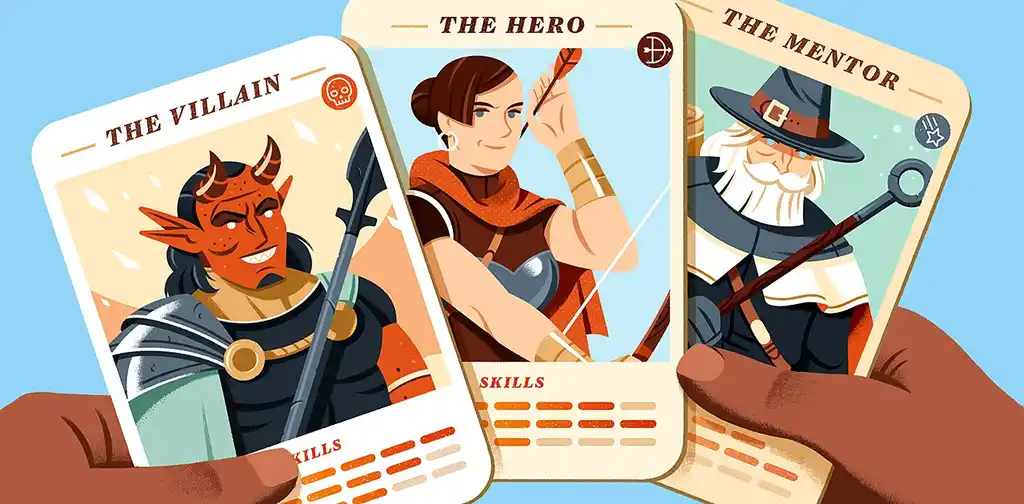
These tropes all depend on creating characters your readers will love. For help, download our free character profile template.
FREE RESOURCE
Reedsy’s Character Profile Template
A story is only as strong as its characters. Fill this out to develop yours.
7. Forced proximity
This one has several popular sub-tropes: “there’s only one bed”, “trapped in an elevator”, “stuck in a car”, etc. The point is, two people — who may not know each other well, or are otherwise uncomfortable in close proximity — have to share an enclosed space. They typically must compromise and rely on each other to get through the experience… and the sexual tension often flares up in a big way.
To write your own “forced proximity” romance, just pick a location and take it from there. Tap into your own fears of being trapped somewhere, and see where it goes!
Here are a couple of examples of the trope across popular culture.
Forced proximity examples
Speed (Action Romance)
Jack, Annie, and various other passengers are trapped on a bus that’s hurtling along the road at 50 mph (no more, and certainly no less). The reason? The bus is rigged with a speed-sensitive bomb. Over the course of the movie, Jack and Annie grow closer as they try to defuse the situation (literally) — eventually sharing a moment of passion once the danger subsides.
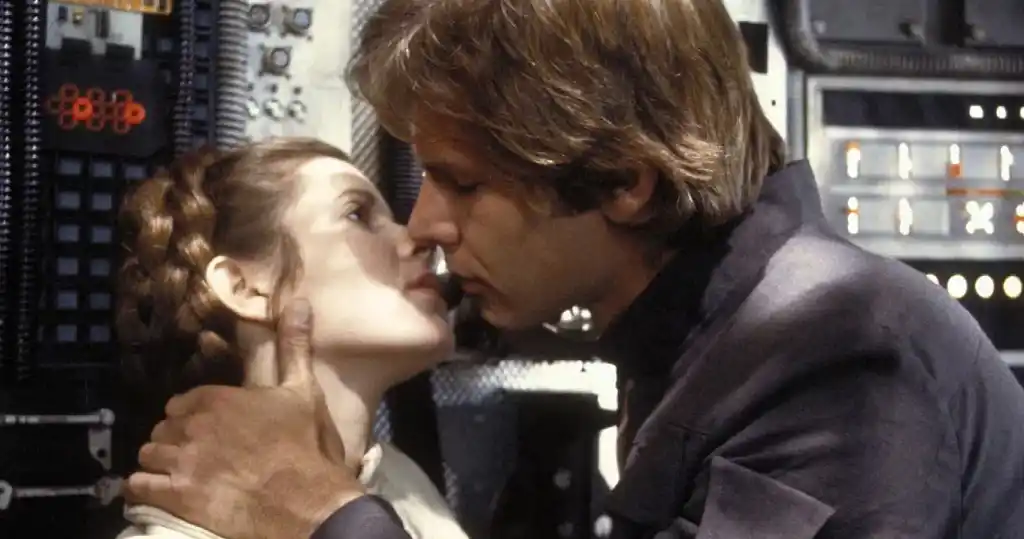
Star Wars: The Empire Strikes Back (Sci-Fi)
Han Solo and Princess Leia could make a strong play for the “enemies to lovers” trope — but given that they’re stuck on the Millennium Falcon for a good chunk of The Empire Strikes Back, we think they fit nicely here. As with the Speed example, these two may be trapped together under less-than-ideal circumstances — but if anything, that only heightens the tension between them. When they kiss as Leia is repairing the Falcon, it’s only the beginning of their romance… which obviously continues to unfold even after they’ve gotten off the ship.
8. Bad boy hero
Who doesn’t love the classic story of someone cold and aloof whose heart thaws in the presence of “the one”? The key to this trope is that every bad boy (or girl, or enby) is, deep down, a good person who has faced personal trauma — and it’s up to their new love to reconnect them with their “sweetheart” side.
Of course, when creating a “bad boy” in a romance novel, you must ensure that any bad behavior is still plausibly redeemable. That’s why most bad boy characters in this genre tend to be only emotionally unavailable — rather than, say, war criminals.
Bad boy hero examples
Jane Eyre by Charlotte Brontë (Historical Romance)
In this Gothic-infused classic, the title character is the new governess of Thornfield Hall. She soon starts developing feelings for her employer, the dark, mysterious, and often abrupt Mr. Rochester. They grow close, but Rochester keeps her at arm’s length — even leading Jane to believe he intends to marry another. Of course, he eventually succumbs to his feelings, and they live happily ever after.
The Breakfast Club (Coming-of-Age)
Don’t you, forget about me… said Bender to Claire (probably). We can’t be sure, as this ’80s classic takes place mostly in one room, across just a few hours! In any case: “good girl” Claire slowly falls for “bad boy” Bender over the course of the movie — and by the end, Bender’s tough exterior has softened. Similarly, Claire manages to access a newly vulnerable side, and the two both bond over their newfound empathy for each other and their fellow students.
9. Secret identity
What would you give up for love — fame, royalty, millions of dollars? It might sound like an (arguably) poor life choice, but such a choice is essential to the “secret identity” trope. It goes like this: a royal figure or billionaire is tired of being in the public light. They long to be treated like a normie, so they adopt a disguise or go somewhere they won’t be recognized.
This trope can be a near-endless fount of farcical comedy, as the narrative comes closer to revealing their identity. The key is striking the right balance of believability — so the unsuspecting lover doesn’t come across as foolish for not recognizing their partner earlier.
Secret identities come in all shapes and sizes. And they don’t have to be rich; they could just be famous, or even a secret agent. Here are a couple examples of this trope.
Secret identity examples
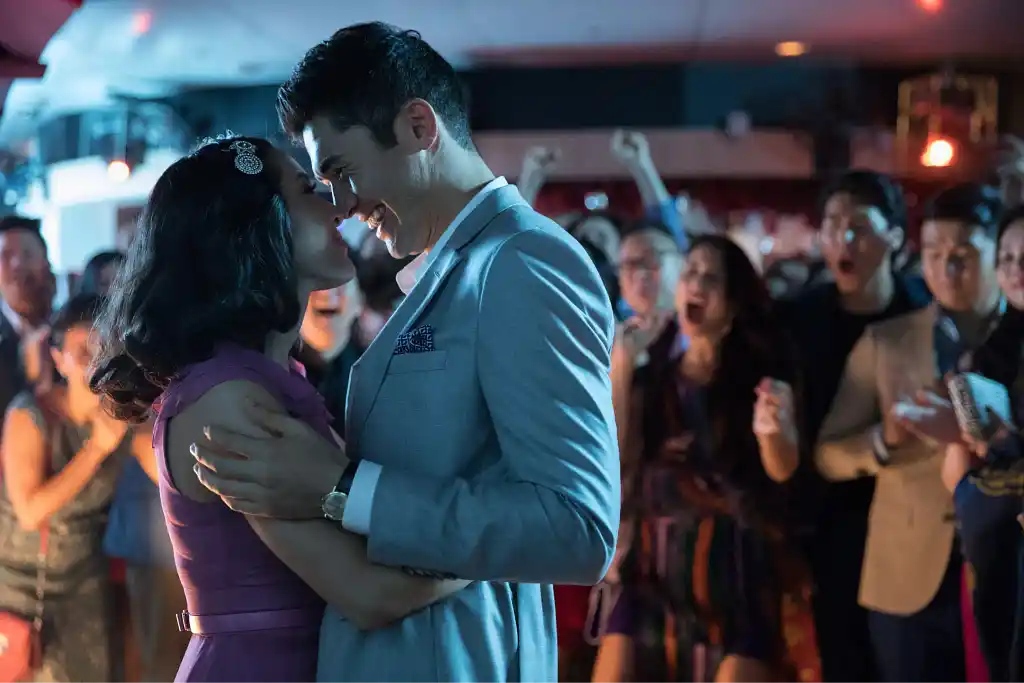
Crazy Rich Asians by Kevin Kwan (Contemporary Romance)
The clue’s in the name for this one! Our heroine, Rachel, has no idea that her boyfriend Nick belongs to one of the wealthiest families in Asia. Nick, for his part, naively thinks that his family will accept his middle-class girlfriend — but on a trip back home to Singapore, he learns this isn’t the case. So while Nick reveals his “secret identity” pretty close to the start of the story, there’s still a riveting element of surprise throughout the story! Rachel, for example, struggles to comprehend the sheer extent of her boyfriend’s wealth — which makes for exciting tension as she navigates the expectations and challenges that come with his family.
The Prince and Me (Romantic Comedy)
Prince Edvard of Denmark is tempted by the promise of wild American college girls, and abandons his royal responsibilities to attend the University of Wisconsin-Madison. There, he meets Paige — a pre-med student who instantly disdains of “Eddie”. But as their relationship develops at the bar where they both work, romance ensues. What will happen when Paige discovers his big lie? Will she forgive him and allow herself to become a princess?
10. Second-chance romance
The second-chance romance trope can play out in a few different ways. A couple might break up in college and reunite decades later. Or maybe they’ve both been deeply hurt and spent years avoiding any kind of romance — only to finally meet and give love another shot.
While a lot of romance tends to focus on younger couples, the second-chance romance trope is a great vehicle to work with more, ahem, seasoned characters. If you’re interested in writing a romance where both parties have baggage, but are still willing to put themselves out there and rediscover something great, then second-chance romance could be the trope for you.
Start by checking out these examples for some inspiration.
Second-chance romance examples
Persuasion by Jane Austen (Historical Romance)
A classic, foundational example of the trope, Persuasion follows Anne Elliot and Captain Frederick Wentworth: two lovebirds who are separated due to family pressure. When they reunite years later, a frisson of connection still lingers between them. Despite various forces pushing them in different directions, Anne and Wentworth — now older and wiser for their time apart! — eventually decide to give it another shot.
It Ends with Us by Colleen Hoover (Contemporary Romance)
Recently adapted for the screen, this tear-jerking exploration of domestic abuse adds powerful stakes to the second-chance romance trope. After witnessing her father’s abuse towards her mother, protagonist Lily struggles to understand why she stayed. But when her own partner begins acting violently, things finally click into place for Lily — who must then grapple with breaking the cycle of generational abuse. Luckily, Lily manages to reconnect with her first true love, Atlas, before it’s too late.
11. Soulmates/destiny
While many of these romance tropes involve two people slowly realizing their feelings for one another, the “soulmates/destiny” trope involves couples who know that they are meant to be together. Their intense bond remains — even as the universe, typically, conspires to separate them.
The tricky thing with this trope is that you’re keeping your protagonists away from each other, which is usually the opposite of what romance readers want. So you have to find other ways to let your characters interact and stoke the embers of their love just enough to ensure your readers stay to the end.
Let’s delve into some examples.
Soulmates/destiny examples
The Time Traveler’s Wife by Audrey Niffenegger (Literary Romance)
When Clare meets Henry in a meadow near her home, she has no idea he’s a time traveler visiting from her own future. Over the years, their paths cross out of sync — making for a brutal love story where true connection remains slightly out of reach. Despite this, it’s obvious that the two are meant to be together, as fate refuses to keep them apart.
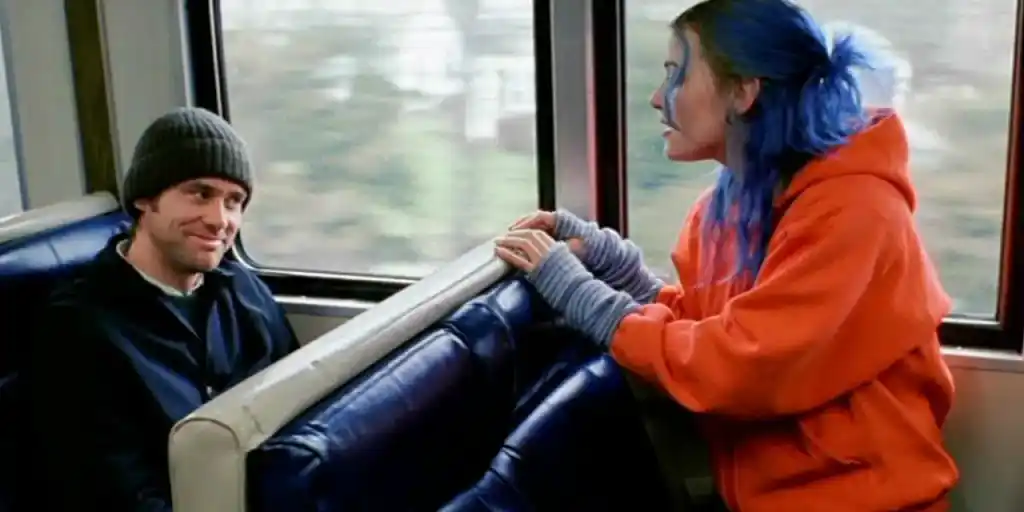
Eternal Sunshine of the Spotless Mind (Sci-Fi Romance)
After a painful breakup, Joel and Clementine use cutting-edge technology to erase each other from their memories. Yet despite their attempts to forget each other, they’re drawn together again by instinct alone. The movie confronts the question that any heartbroken lover surely asks themselves: would it be easier to forget them entirely? Well, in Joel and Clementine’s case, they certainly try… it just doesn’t work. Sorry, guys.
12. Forbidden love
Forbidden fruit always tastes the sweetest, right? This romance trope involves two people who are desperately in love, but kept apart by their families, culture, or geographical distance. (Note that this is different from unrequited love, which is generally one-sided!)
Looking to write a forbidden love romance story? Try thinking of a situation in which a couple might encounter resistance, and work backwards. The resistance could be social pressure, family expectations, or legal restrictions. As long as their love is true (and consensual), then everything’s groovy.
Here are two examples of lovers brutally torn apart by circumstance.
Forbidden romance examples
Romeo and Juliet by William Shakespeare (Tragic Romance)
How could we talk about forbidden romance without Romeo and Juliet? For those who may be unfamiliar, this classic play follows Romeo Montague and Juliet Capulet, two young lovers whose families hate each other. The flame between them burns strong and bright — but is it enough to overcome generations of hatred? It’s an unforgettable romantic tragedy for a reason: things don’t end well for our “star-cross’d lovers”, but their names will forever be synonymous with deepest passion and forbidden love.
Noughts and Crosses by Malorie Blackman (YA Speculative Romance)
Blackman weaves a clever yet stark social commentary in Noughts and Crosses — reimagining racial divides by affording the majority of wealth and power in society to the Crosses (i.e., black people). Segregation reigns supreme in this bleak dystopia, and the divide extends to another pair of star-crossed lovers, Callum (a Nought) and Sephy (a Cross). Despite societal difficulties, these two continually find their way back to one another — a testament to the power of true love in the face of harsh external forces.
FREE COURSE
How to Turn Up the Heat in Your Romance
10 lessons on how, when, and where to add steamy scenes to your novel.
13. Switching couples
We’ve covered a few “will they/won’t they?” romance tropes on this list, but what about “I wish they wouldn’t?” That’s where this trope comes in — when a couple is so badly suited, the reader can’t wait until their relationship is over. But of course, true love is just around the corner… specifically, in the form of another poorly suited couple, where each party just happens to be the perfect match for the individuals in the OG couple.
You’ll have to watch your tone with this one, as switching couples can easily come across as comedic. If that’s what you’re going for, then great — but tread lightly if you want high emotional stakes. Remember that there should be a reason why your OG couple got together in the first place, and an equally compelling reason for their breakup. Keep your characters engaging, otherwise you risk the switcheroo feeling a bit pointless.
Here are a few examples of the trope in action.
Switching couples examples
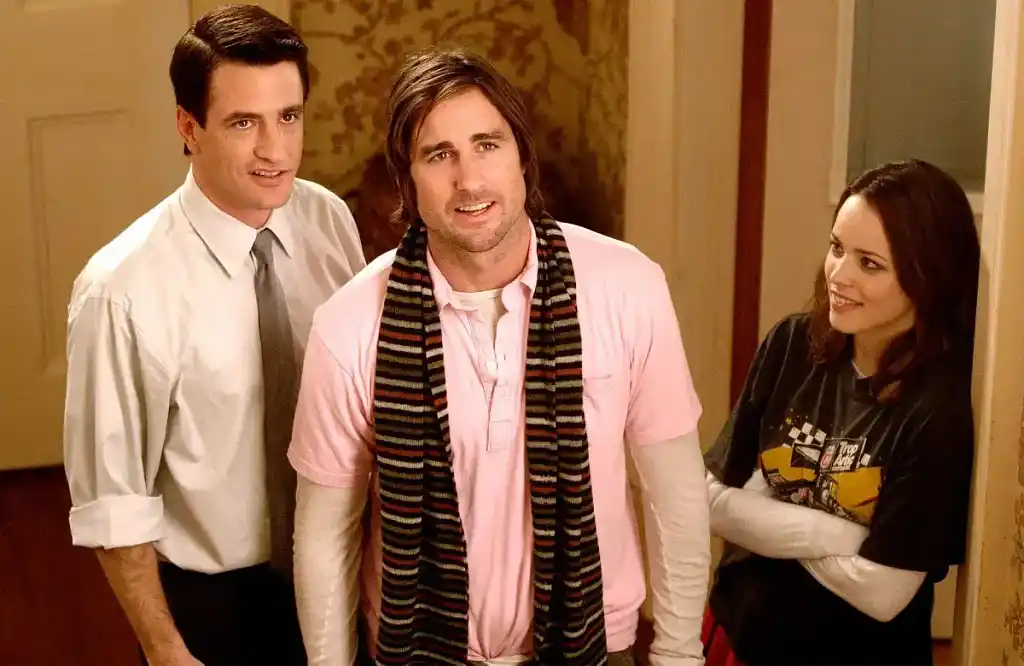
The Family Stone (Romantic Comedy)
What’s worse than meeting your partner’s family for the first time? Meeting your partner’s family… right when your relationship is falling apart. In this Christmas classic, oldest brother Everett introduces his girlfriend Meredith to his family, who quickly label her an uptight snob. It’s not until Meredith’s sister Julie comes along for the ride that everything falls into place. As Meredith realizes her attraction to Everett’s brother, Ben, her own boyfriend slowly falls for Julie — and it transpires that perhaps they were all after the wrong sibling.
Funny Story by Emily Henry (Contemporary Romance)
Engaged couple Daphne and Peter have the perfect relationship — on paper. This paper, unfortunately, gets ripped to shreds when Peter runs off with his childhood friend Petra. The good news is that Daphne has great company in the form of Petra’s ex-boyfriend, Miles. Consoling each other through their respective breakups, they soon hatch a plan to fake-date (see trope #6) in order to show their exes what they’re missing — only to find that they, Daphne and Miles, are a far better match. Funny story, really.
14. Belated love epiphany
As Joni Mitchell says: “Don’t it always seem to go, that you don’t know what you got ’til it’s gone?” That’s the idea behind the “belated love epiphany” trope: the protagonist loses (or is at risk of losing) someone they previously overlooked. Only in their absence does the protagonist realize what the other character meant to them — and with this, they’ll often drop everything to try and get them back.
This trope can result in a happy ending, but it can also be fodder for heartbreak (which is cathartic in its own way). As long as you’ve shown readers that your couple really did have a great connection — even if it comes to a bittersweet end — you can rest assured that they’ll appreciate the overall narrative arc
Here are some examples of romance stories where a character waits a little too long (or almost too long) to come to their damn senses.
Belated love epiphany examples
Wuthering Heights by Emily Brontë (Classic Gothic Romance)
Catherine and Heathcliff’s turbulent bond is defined by passion, pride, and terrible timing. Heathcliff realizes his feelings for Cathy only after she marries another man… and societal and class differences color their relationship with further uncertainty. After missing his chance with Cathy, Heathcliff dooms several generations with his grief. It’s a tad dramatic — but what else can you expect from the seminal Gothic romance?
How to Lose a Guy in 10 Days (Romantic Comedy)
On a more uplifting note, Andie and Ben from How to Lose a Guy in 10 Days don’t let each other get away quite so easily. Their relationship starts on admittedly shaky ground: each one is (mildly) deceiving the other for personal gain. But through all the manufactured drama, they discover they have chemistry and a genuine connection… which makes the reveal of their mutual deception all the more devastating. Still, in the end, both have belated love epiphanies and learn their lessons.
15. Happily ever after
At last, we turn to the sweetest romance trope: happily ever after. This one is truly timeless, and quite possibly the reason we all keep waiting for an impossibly perfect Prince Charming. That said, it’s also pretty predictable — so you’ll want to furnish the rest of your story with plenty of twists and turns to keep the reader interested.
For that reason, it’s definitely a good idea to combine this trope with others from this list. You may have noticed that many of the examples in this post end happily, and there’s a good reason for that — your readers want to see your characters succeed. Just make sure that you do it in a believable and engaging way.
Here are some examples of love stories rounded off on a high.
Happily ever after examples
The Hating Game by Sally Thorne (Contemporary Romance)
Lucy and Josh are competing for the same promotion. The tension between them soon reaches boiling point — and, as we know from chemistry class, that’s when things transform from one state to another. Slowly their disdain develops into something sweeter, and the reader is rewarded with a happy ending on all fronts. Lucy gets the promotion, Josh resigns for another excellent job, and they can be together with no remaining qualms — personal or professional.
Twilight by Stephenie Meyer (Romantasy)
Love it or hate it, you didn’t think we’d skip this one, did you? The quintessential YA romantasy that combines vampires, werewolves and (if you’re watching the movies) some pretty bad CGI, Twilight waits a whole four books to reach a satisfying conclusion. Sandwiched in between are love triangles, bad boy heroes, secret identities, forbidden love and opposites attract tropes. But don’t worry — it’s all tied together with a blood-suckingly happy ending.

Remember, tropes only become clichés when they’re used in the exact same way that people have seen time and time again. If you can bring new characters, settings, and specifics to these tropes, you can win over some of the most passionate readers on the planet.
In the next part of our swoon-worthy romance guide, we’ll show you how to write your romance novel now that you’ve got some beloved tropes in your arsenal.